Certification (EN)

Certification
Medically Proven,
Data You Can Trust
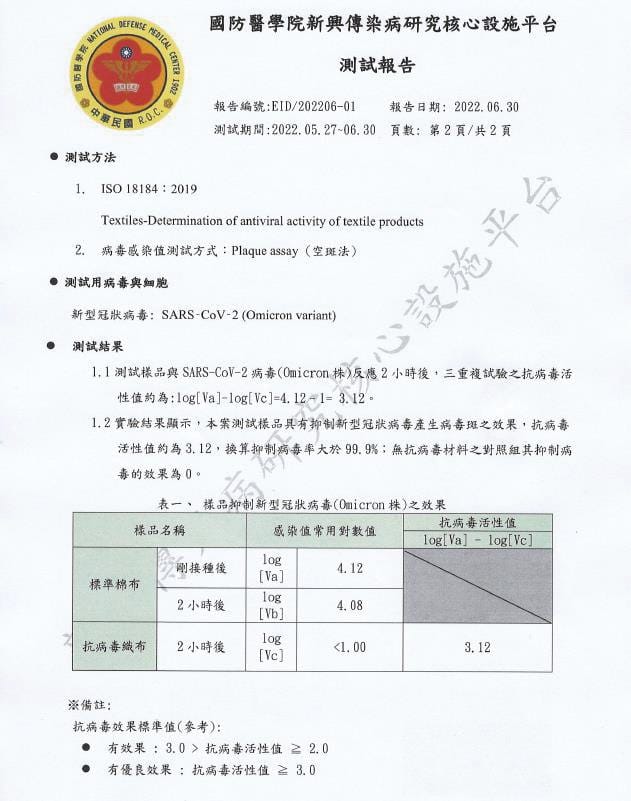
TiVibin's liquid coating is validated by leading medical and third-party institutions. A P4-laboratory test showed 99.99% suppression of the Omicron virus within 30 seconds, alongside ISO 18184 antiviral certification.
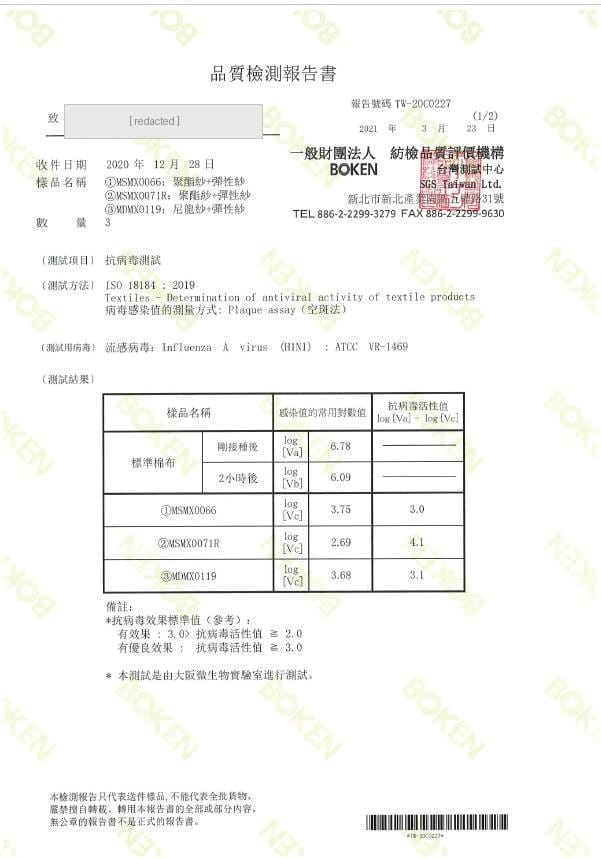
Verified effectiveness also covers COVID-19 (Delta, Omicron), Enterovirus 71, influenza A (H1N1/H3N2), Staphylococcus aureus, E. coli, MRSA and Candida albicans.
International Certifications
& Regulatory Approvals
Cross-border certifications and regulatory filings, so professional-grade protection is trusted in every market.
FDA Class Medical Device Registration
Skin toxicity & biocompatibility tests passed
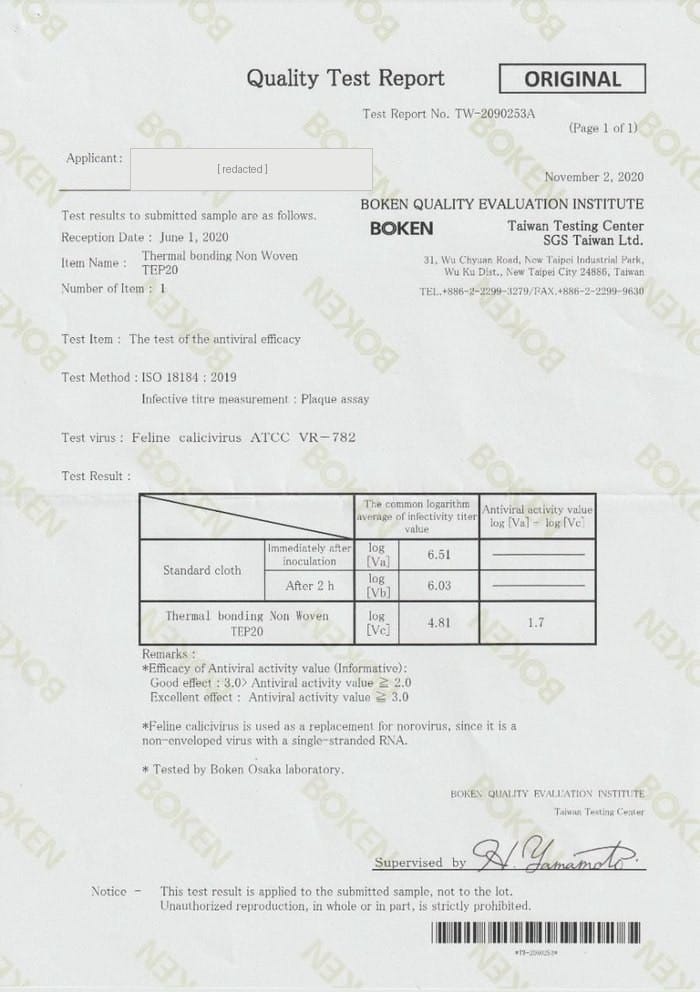
BOKEN Antibacterial / Antiviral Testing
JIS L1902 / ISO 18184 verified
NanoVerify Safety Certification
Nanomaterial application safety certification
NHC Disinfectant Product Registration
(Health-Disinfection No.) CNAS accredited report
SNQ National Quality Mark
Clinical application evidence report
ISO 18184 Antiviral Certification
SGS · Intertek third-party verified
Seven Biocompatibility Studies
All to ISO 10993
All studies were run by an accredited laboratory in compliance with Good Laboratory Practice (US FDA 21 CFR Part 58 and Taiwan MOHW), using ISO 10993 test methods.
- CytotoxicityISO 10993-5 | Grade 0, 92% cell viability
- Skin irritationErythema and oedema 0/3
- Skin sensitisationMaximization Test
- Acute oral toxicity20 mL/kg — no symptoms, no mortality
- Eye irritationISO 10993-10
- Acute inhalation toxicityRepeated-dose inhalation study
- GenotoxicityAmes reverse mutation test
Where the Technology Is Deployed
Since its development at the National Research Institute, functional titanium has been deployed across a range of public and healthcare settings in Taiwan.
These are deployment settings for the National Research Institute’s functional-titanium technology, not TiVibin’s own project record.
Four Pillars of
Validated Efficacy
Antiviral
Passed ISO 18184 antiviral textile testing.
Antifungal Testing
Mold, Candida albicans, Microsporum canis.
Virus Suppression
COVID-19 (Delta, Omicron), Enterovirus 71, norovirus-like structures, influenza A (H1N1, H3N2).
Antibacterial Testing
Staphylococcus aureus, Pseudomonas aeruginosa, E. coli, MRSA, Salmonella, Klebsiella, Cutibacterium acnes and more.
Clinical Evidence in Healthcare Settings
A five-month controlled trial in hospital respiratory care wards, published in BMC Infectious Diseases.
Study Design & Results

Illustrative image — not the trial site
- The experimental ward received functional-titanium coating on high-touch surfaces; the control ward maintained standard cleaning.
- HAI density in the experimental ward declined progressively (4.70 → 0.90 per 1,000 patient-days); the control ward initially fell then rebounded to 5.87.
- In the final two months, HAI density was 1.89 in the experimental ward versus 5.51 in the control ward (per 1,000 patient-days).
- Poisson regression showed significantly divergent trends between wards (Group × Time interaction, p = 0.038).
- Patients were long-term ventilator-dependent with a mean stay of 3.2 years, providing ideal conditions for assessing coating durability.
In short: in the treated ward, infections fell to a fifth of where they started.
Two respiratory care wards in the same hospital — one coated, one kept on its usual cleaning routine. Over five months, the infection rate in the coated ward fell steadily; in the other ward it dipped at first, then climbed back to where it had started.
These patients had been in hospital for more than three years and depend on ventilators — the group most prone to infection. The coating held its effect for five months in that environment, which says something about its durability.
Study Limitations (as reported by the authors)
- Environmental bacterial counts did not differ significantly between groups (p = 0.076). The authors note this disconnect between environmental and clinical outcomes warrants mechanistic investigation.
- This was a two-ward controlled trial, not randomised; the experimental ward had an older patient population (80.0 vs 75.6 years).
Yang Y-K, Sun W-C, Chen C-H, Chen S-H, Chou W-Y, Liu S-Y. Long-term effectiveness of titanium dioxide-silver composite coating in reducing healthcare-associated infections in chronic respiratory care wards: a controlled trial. BMC Infectious Diseases. 2026;26:1295. https://doi.org/10.1186/s12879-026-13583-1
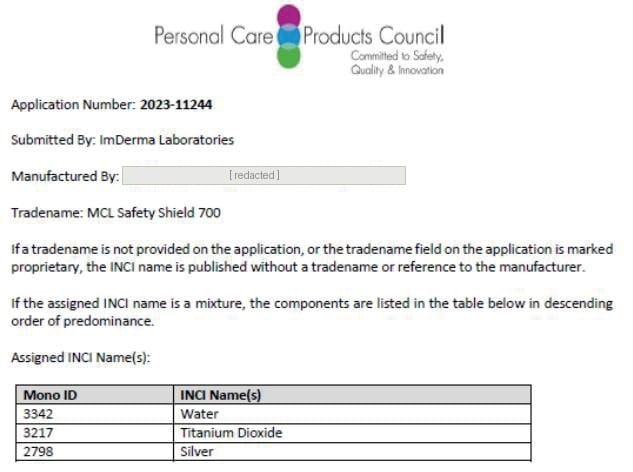
Original Test Reports
All testing is carried out by independent third-party institutions — the data is real and verifiable.
Certification & Testing Bodies





Need the full test reports?
Get in touch for original certificates, test data, or to discuss implementation and custom validation.
Contact Us â